
—n. 1 hist. member of the radical faction of the Russian Social Democratic Party becoming the Communist Party in 1918. 2 Russian Communist. 3 any revolutionary socialist. —adj. 1 of the Bolsheviks. 2 Communist. Bolshevism n. Bolshevist n. [Russian, = member of the majority]
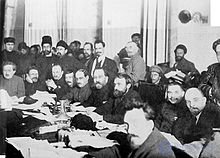
 ... XX centuries Political science also developed quite intensively However , after theBolshevik October 1917 , thisdevelopment stopped - until .theend oftheTheplace ofpolitical science intheSoviet ... (Political science)
 ... with ten capitalist ministers ”, “Down with war ” These slogans were put forward by the Bolshevik Party The July crisis of the Provisional Government began on July . 4 , 1917 ... ... Government began on July . 4 , 1917 , when a demonstration was held in Petrograd .under the Bolshevik slogans During the demonstration , spontaneous exchanges of fire took place , as. a result of which ... (The World History)
 ... Constituent Assembly , which began work on January 5 1918 ., refused to discuss the Bolshevik Declaration of the Rights of.the Working and Exploited People - The Bolsheviks left the courtroom in protest ... (The World History)
 ... of Russians and the enormous devastation of the. national economy The New Economic Policy (NEP ) of the Bolshevik Party allowed . for seven years (1921 - to overcome the devastation , restore industry ,.agriculture ... (The World History)
 ... to power in many .countries of the socialist parties and, finally , the lasting conquest of. power in Russia the Bolshevik Party World War I was a catalyst for industrial development During the war years , 28 ... (The World History)
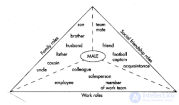 ... (they are vividly manifested 'in contrast ' in violation of. the usual characteristics of the role : crying man : crying Bolshevik ,.crying prime minister ; compare hugs and kisses for men and women ., but at the same time ... (Communication theory)

Комментарии